Onchain payroll rails replace manual ledgers
DAO payroll automation replaces fragmented spreadsheets with immutable, programmable payment rails. This shift reduces administrative overhead but introduces complex legal and regulatory liabilities that require precise technical configuration.
Streaming versus batched payment models
DAO payroll automation requires choosing between two distinct technical architectures: real-time streaming and batched smart contract payouts. This decision carries significant legal and regulatory weight, as the timing and method of fund transfer directly impact tax withholding obligations, labor classification, and treasury liquidity management.
Real-time streaming, exemplified by protocols like Sablier, treats compensation as a continuous flow of value rather than a discrete event. Contributors are paid proportionally for every second worked. This model offers granular visibility into accrued liabilities, allowing treasuries to reconcile payroll costs against blockchain activity in near real-time. However, the high frequency of on-chain transactions can complicate tax reporting in jurisdictions that treat each micro-transfer as a taxable event, potentially increasing administrative overhead for compliance teams.
Batched payouts, used by platforms such as Aragon and Paymagic, aggregate compensation over a set period before executing a single smart contract transaction. This approach reduces on-chain gas costs and simplifies accounting by consolidating earnings into a single record per pay cycle. While efficient for treasury management, batched models can obscure the exact moment compensation is earned, creating ambiguity in jurisdictions where the timing of income recognition dictates tax liability.
The choice between these models hinges on the DAO’s operational complexity and regulatory exposure. Streaming provides precision but demands rigorous transaction monitoring. Batching offers simplicity but requires robust off-chain tracking to ensure compliance with local labor and tax laws.
| Feature | Streaming (e.g., Sablier) | Batched (e.g., Aragon, Paymagic) |
|---|---|---|
| Payment Timing | Real-time, per second | Periodic, per cycle |
| Tax Withholding | Complex, granular tracking required | Simplified, consolidated records |
| Cash Flow Impact | Continuous outflow, precise accruals | Lump-sum outflow, liquidity planning |
| Integration Complexity | High, requires real-time reconciliation | Lower, standard payroll workflows |
| On-Chain Gas Costs | Higher, frequent transactions | Lower, aggregated transactions |
Treasury management and multisig safeguards
Automating payroll in a decentralized autonomous organization introduces significant financial exposure if treasury controls are insufficient. A single compromised private key or a rogue administrator can drain funds before the community detects the anomaly. To mitigate this, DAOs must implement multisignature (multisig) wallets as the foundational layer for any payroll execution. This structure ensures that no single entity can unilaterally move funds, requiring multiple authorized signers to approve transactions.
Role-based access control (RBAC) further restricts who can initiate or approve payroll disbursements. By separating the duties of payroll calculation, approval, and execution, DAOs create internal checks that align with traditional corporate governance standards while maintaining decentralization. Systems like Wag3s provide multisig treasury reconciliation and audit-ready reports across multiple chains, ensuring that every payroll transaction is traceable and verifiable.
The necessity of multisig structures cannot be overstated. Without them, the efficiency gains of automation are outweighed by the catastrophic risk of unauthorized access. Gnosis Safe and similar protocols offer the robust security required for high-stakes financial operations, ensuring that payroll execution remains compliant and secure.
Cross-border tax compliance and reporting
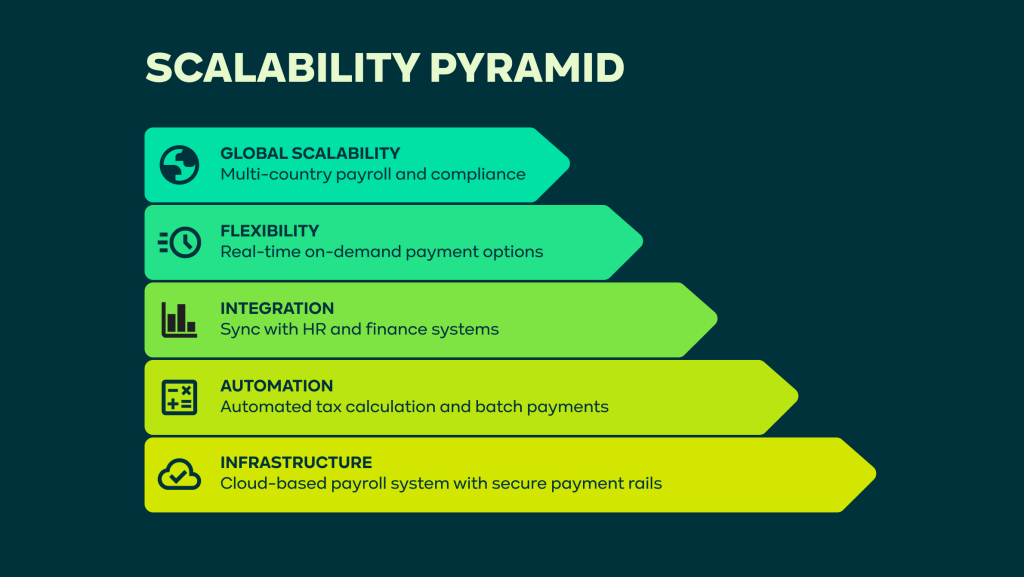
Cross-border payroll automation requires navigating a fragmented regulatory landscape. Unlike traditional employment, DAO contributors often operate across multiple jurisdictions, each with distinct digital asset reporting laws. Failure to properly classify contributors as employees versus independent contractors can result in severe penalties from tax authorities such as the IRS or HMRC.
DAOs must implement robust off-chain tracking mechanisms to complement on-chain execution. This includes collecting valid tax identification numbers, issuing appropriate forms (such as 1099-NEC or W-8BEN), and maintaining immutable logs of all transactions for audit purposes. Automated tools that integrate with tax reporting platforms can help standardize these processes, but human legal review remains essential to interpret local labor laws.
Choosing the right payroll infrastructure for your DAO
Selecting the correct payroll infrastructure is a governance decision with immediate legal and financial consequences. A mismatch between your team’s structure and your payment rails can trigger unexpected tax liabilities, fail multisig verification, or expose the treasury to smart contract risk. The following framework helps treasurers evaluate solutions based on three critical dimensions: team size, geographic distribution, and compliance maturity.
Step 1: Assess team size and payment frequency
Small, decentralized teams often require minimal overhead, while larger organizations need robust reconciliation. If you pay fewer than five contributors sporadically, a simple multisig wallet with manual transfer scripts may suffice. However, as headcount grows, the administrative burden of manual payments outweighs the cost of automation.
For teams exceeding ten contributors or those with recurring bi-weekly/monthly payouts, dedicated payroll dApps become necessary. These tools integrate directly with your treasury, automating the calculation of token amounts and executing transactions via governance-approved thresholds. This reduces human error and ensures every payment aligns with approved budget lines.
Step 2: Map geographic distribution and tax complexity
DAO contributors operate across borders, meaning your payroll infrastructure must handle multi-jurisdictional compliance. If your team is concentrated in a single country, standard payroll software may work. However, a globally distributed team requires a solution that can manage diverse tax forms (such as W-8BEN or 1099-NEC equivalents) and currency conversions.
Evaluate whether the platform supports automated tax form collection and jurisdiction-specific reporting. Solutions that only support native token transfers without tax withholding capabilities will leave your DAO vulnerable to regulatory scrutiny in jurisdictions with strict digital asset reporting laws.
Step 3: Verify compliance maturity and audit readiness
Your payroll infrastructure must generate audit-ready reports that satisfy both internal governance and external regulatory bodies. Look for platforms that offer multi-sig treasury reconciliation and immutable transaction logs across multiple chains. This ensures that every payout is traceable and verifiable by auditors or DAO members.
Tools like Wag3s provide finance operating systems designed for DAOs, offering audit-ready reports and multi-sig reconciliation across 30+ chains. Similarly, specialized dApps like Aragon’s payroll module streamline employee management and payment tracking. Ensure the chosen solution integrates with your existing governance stack to maintain a single source of truth for all financial activities.
Frequently asked questions about decentralized payroll
How does DAO payroll automation handle tax compliance?
Automated payroll systems rely on smart contracts to execute payments, but they do not automatically calculate jurisdiction-specific tax liabilities. Organizations must integrate external tax reporting tools or manual workflows to ensure contributions meet local regulatory requirements. Relying solely on code execution without legal review creates significant compliance exposure across borders.
Can smart contracts replace human payroll administrators?
Smart contracts automate the transfer of funds based on predefined logic, eliminating administrative overhead and reducing human error in payment execution. However, they cannot interpret nuanced employment classifications or resolve disputes. Human oversight remains essential for managing exceptions, verifying contributor identities, and handling legal adjustments that code cannot anticipate.
What are the security risks of automated crypto payroll?
Deploying payroll smart contracts introduces attack surfaces such as reentrancy vulnerabilities or oracle manipulation. A compromised contract can lead to irreversible fund loss. Rigorous third-party audits and multi-signature treasury controls are mandatory to protect organizational assets. Regular security assessments should be treated as a continuous operational requirement, not a one-time event.
How do DAOs manage payroll in multiple currencies?
Most DAOs utilize stablecoins to mitigate volatility risk during payroll cycles, ensuring contributors receive predictable value. Cross-border payments via stablecoins reduce transaction fees and settlement times compared to traditional banking rails. Treasury managers must monitor liquidity pools to ensure sufficient reserves exist for global disbursements without impacting operational capital.
No comments yet. Be the first to share your thoughts!