The 2026 compliance landscape
By 2026, the regulatory environment for Decentralized Autonomous Organizations (DAOs) has shifted from ambiguous guidance to explicit enforcement. Global tax authorities are no longer treating digital asset governance as a gray area. Instead, they are implementing real-time reporting frameworks that require automated, immutable transaction logs. For DAOs operating across borders, manual compliance is no longer a viable strategy; it is a critical liability.
The primary driver of this shift is the integration of payroll automation with tax withholding systems. As noted in industry analyses for 2026, automation of repetitive processes is now standard, but the regulatory expectation goes further. Authorities demand predictive accuracy and audit trails that can withstand immediate scrutiny. This means that stablecoin payments and smart contract distributions must be pre-validated against local tax codes before execution. Failure to integrate these checks results in retroactive penalties and potential loss of legal standing in key jurisdictions like the EU and the US.
This regulatory pressure extends beyond simple income tax. Withholding obligations for cross-border contractors, local social security contributions, and digital services taxes are now interconnected. A DAO that processes payroll in one jurisdiction must simultaneously account for the tax implications in the recipient’s location. The infrastructure must be dynamic, updating automatically as tax laws change, rather than relying on annual manual reviews. This level of compliance requires a system that treats tax logic as a core component of the payment protocol, not an afterthought.
Stablecoin rails vs fiat layers
DAO payroll infrastructure requires a clear distinction between traditional fiat settlement and on-chain stablecoin disbursement. The choice determines not only the speed of fund distribution but also the regulatory framework applicable to the organization. Fiat layers rely on established banking corridors, while stablecoin rails operate on public or permissioned ledgers. Understanding the technical and legal tradeoffs is essential for compliance in high-stakes environments.
Settlement Speed and Finality
Fiat payroll typically relies on the Automated Clearing House (ACH) network in the United States or SEPA in Europe. ACH transfers often take one to three business days to settle, with cut-off times that can delay processing for multi-jurisdictional teams. In contrast, stablecoin transactions on networks like Ethereum or Solana offer near-instant finality. This allows DAOs to distribute compensation globally without banking hours or weekend delays. However, network congestion can introduce variable latency and transaction fees, which must be accounted for in budget planning.
Compliance and Reporting Overhead
Traditional fiat payroll integrates with established tax reporting systems, such as IRS Form W-2 in the US. Banks provide standardized transaction records that align with existing audit trails. Stablecoin transactions, while transparent on-chain, lack inherent identity linkage. This creates a compliance gap for Know Your Customer (KYC) and Anti-Money Laundering (AML) requirements. DAOs must implement off-chain identity verification layers to meet regulatory standards, adding complexity to the payroll stack. The European Union’s Markets in Crypto-Assets (MiCA) regulation, effective from 2024, introduces additional reporting obligations for stablecoin issuers and users.
Currency Risk and Stability
Fiat payroll is denominated in local currencies, shielding the organization from exchange rate volatility between the payment and settlement dates. Stablecoin payroll introduces currency risk if the DAO’s treasury is not perfectly matched to the disbursement currency. While stablecoins are pegged to fiat, they are not insured by the Federal Deposit Insurance Corporation (FDIC). Any de-pegging event could impact employee compensation value. DAOs must maintain robust reserve audits and consider hedging strategies to mitigate this risk.
Side-by-Side Comparison
The following table outlines the primary operational differences between stablecoin rails and fiat layers for DAO payroll infrastructure.
| Feature | Stablecoin Rails | Fiat Layers |
|---|---|---|
| Settlement Time | Minutes to seconds | 1-3 business days |
| Global Reach | Borderless, 24/7 | Limited by banking corridors |
| Regulatory Framework | Evolving (e.g., MiCA 2024) | Established (e.g., ACH, SEPA) |
| Tax Reporting | Manual/Off-chain integration | Automated (e.g., W-2, 1099) |
| Currency Risk | De-pegging potential | None (local denomination) |
| Banking Insurance | No FDIC/SIPC coverage | FDIC/SIPC insured |
Real-time tax update mechanisms
Modern payroll infrastructure must ingest jurisdictional tax changes automatically to prevent misclassification and underpayment. In 2026, the standard for global organizations involves systems that catch errors at data entry and process payments in real time. This capability drastically reduces the risk associated with frequent labor law changes and diverse workforce requirements.
The mechanism operates through a continuous ingestion pipeline that monitors official regulatory sources. When a jurisdiction updates its withholding tables or classification rules, the system detects the change and applies it to pending transactions before payout. This ensures that DAO payroll rails remain compliant with the latest statutory requirements without manual intervention.
1. Regulatory Data Ingestion
The system connects to official government feeds and primary regulatory documents. These sources provide the raw data for tax rates, thresholds, and compliance rules. The infrastructure validates the source of each update to ensure accuracy and legal standing. This step replaces manual monitoring of government websites with automated API calls.
2. Rule Engine Application
Once data is ingested, a rule engine applies the changes to the relevant employee profiles and smart contracts. The engine maps jurisdictional updates to specific payroll components, such as income tax withholding or social security contributions. This mapping ensures that the correct rates are applied to each payment based on the worker’s location and classification.
3. Pre-Payment Validation
Before any stablecoin or fiat payment is released, the system runs a validation check. This step verifies that all tax obligations have been calculated correctly according to the most recent rules. If a discrepancy is detected, the transaction is flagged for review. This pre-payment audit trail provides essential evidence for compliance reporting and reduces the likelihood of penalties.
4. Audit Trail and Reporting
The system logs every tax update and its application to specific transactions. This creates a transparent, immutable record of compliance actions. DAOs can generate reports that demonstrate adherence to local laws, which is critical for maintaining legal standing in multiple jurisdictions. The audit trail supports both internal governance and external regulatory inquiries.
5. Continuous Monitoring
Compliance is not a one-time event but a continuous process. The system maintains constant contact with regulatory sources to detect any further changes. This ongoing monitoring ensures that the payroll infrastructure remains up-to-date with the latest legal requirements. It allows organizations to adapt quickly to new laws without disrupting payroll operations.
Evaluate Infrastructure for Compliance and Audit Readiness
Selecting a payroll provider for a DAO requires a framework that prioritizes legal coverage, API robustness, and immutable audit trails. In 2026, the regulatory landscape for decentralized organizations demands infrastructure that can handle multi-jurisdictional compliance without manual intervention. The selection process must move beyond feature checklists to evaluate how systems handle tax reporting, stablecoin volatility, and cross-border labor laws.
Legal and Tax Coverage
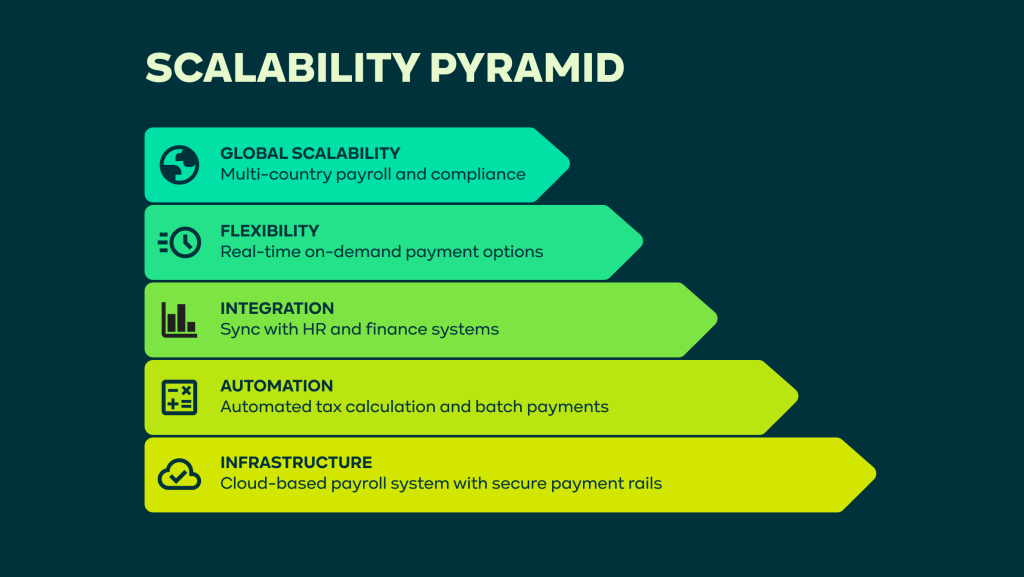
The primary criterion is the provider’s ability to map DAO contributor roles to existing employment classifications across relevant jurisdictions. Systems must support automated tax withholding and reporting for both local and remote workers. Look for platforms that integrate with official government APIs for real-time tax rule updates. The future of payroll increasingly relies on automation to manage these complexities, ensuring that DAOs remain compliant as labor laws evolve. Providers should offer clear documentation on their tax liability handling, particularly for stablecoin payments, to avoid regulatory friction.
API Robustness and Integration
DAOs operate on-chain, requiring payroll systems to interface seamlessly with treasury management tools and smart contracts. The API must support high-frequency, low-latency transactions to facilitate real-time or near-real-time payments. Evaluate the provider’s documentation for SDK availability, webhook support, and error handling mechanisms. A robust API ensures that payroll data can be synced with on-chain governance records, creating a transparent link between treasury disbursements and contributor rewards. Lack of API flexibility can create bottlenecks and increase the risk of manual errors in payment execution.
Audit Trails and Transparency
Immutable audit trails are non-negotiable for DAOs. The system must provide a detailed, time-stamped log of every payroll action, from calculation to disbursement. This log should be exportable in a format compatible with on-chain verification or external auditing tools. Transparency in payroll processing helps build trust with contributors and simplifies compliance audits. Providers should offer granular access controls and reporting features that allow DAO administrators to review payroll history without exposing sensitive personal data.
Pre-Selection Compliance Checklist
Use this checklist to evaluate potential payroll providers against the core infrastructure criteria:
-
Does the provider support automated tax withholding for all target jurisdictions?
-
Is the API documented with SDKs and webhook support for on-chain integration?
-
Does the system provide immutable, exportable audit trails for every transaction?
-
Are stablecoin payment options supported with real-time FX conversion?
-
Does the provider offer clear documentation on data privacy and storage?
-
Is there a dedicated support channel for regulatory compliance inquiries?
Common payroll compliance: what to check next
Understanding the operational boundaries of automation requires distinguishing between routine calculation and regulatory judgment. While software can execute complex logic, it cannot replace the legal accountability of the employer. The following information addresses common inquiries regarding setup procedures, automation limits, and future compliance infrastructure, based on current industry standards and official guidance.
No comments yet. Be the first to share your thoughts!