The 2026 compliance gap for DAOs
Traditional payroll systems were built for static entities operating within single jurisdictions. They assume a clear employer-employee relationship and a fixed tax code. DAOs operate differently. They are borderless, often anonymous, and governed by smart contracts rather than HR departments. When you try to force a DAO into a traditional payroll model, the system fails. It cannot handle the jurisdictional fragmentation inherent in global Web3 teams.
This gap is widening rapidly. In 2026, regulators are closing the loophole that allowed decentralized organizations to fly under the radar. The shift is from voluntary disclosure to mandatory e-filing and real-time reporting in major jurisdictions. IRS e-filing rules now demand granular data about every payout, regardless of the token used. Missing a statutory deadline is no longer a minor administrative error; it is the single biggest operational risk for employers expanding globally.
Manual tracking is no longer viable. The volume of transactions and the diversity of contributor locations make spreadsheet-based compliance impossible to audit. If your DAO still relies on manual spreadsheets to track contractor payments across five different countries, you are building on sand. The 2026 landscape requires automated rails that can instantly classify payments, apply the correct local tax logic, and generate the required regulatory filings.
2026 marks a shift from voluntary disclosure to mandatory e-filing and real-time reporting in major jurisdictions.
The cost of non-compliance has also escalated. Penalties are no longer just financial; they threaten the very existence of the protocol. Regulators are targeting the on-chain activity itself, linking wallet addresses to real-world identities for tax purposes. DAOs that do not integrate compliant payroll infrastructure now face the prospect of frozen assets or forced dissolution.
Why manual tracking fails
The core issue is not just the volume of work; it is the complexity of the data. A single DAO might have contributors in the EU, Southeast Asia, and the US. Each region has different tax thresholds, reporting frequencies, and worker classification rules. Manual systems cannot dynamically adjust to these changing variables. They treat all payments as the same, ignoring the legal reality that a developer in Berlin is taxed differently than a community manager in Lagos.
This fragmentation creates a compliance blind spot. When payments are made in stablecoins or native tokens, the traditional payroll provider sees only a crypto transfer. They do not see the underlying labor relationship. This disconnect leaves the DAO exposed. If an auditor asks for proof of tax withholding, the DAO cannot provide it because the data was never captured in a compliant format.
The 2026 regulatory environment demands precision. Regulators are not interested in the technical details of how a smart contract executes a payment. They are interested in the end result: was the correct tax paid, and was it reported to the right authority? Manual tracking cannot provide this level of granularity. It is too slow, too prone to error, and too opaque for modern regulatory scrutiny.
How automated rails handle global payments
Modern payroll rails bridge the gap between crypto treasury management and local fiat obligations. These systems function as automated intermediaries that convert digital assets into compliant local currency, handling the complex web of tax withholdings and regulatory filings before the funds reach the recipient.
The infrastructure automates worker classification and withholding calculations in real time. Instead of manual checks against federal, state, and local laws, the rail applies the correct tax rate for each jurisdiction instantly. This reduces the risk of IRS penalties and ensures that every payment meets local labor standards regardless of where the team member resides.
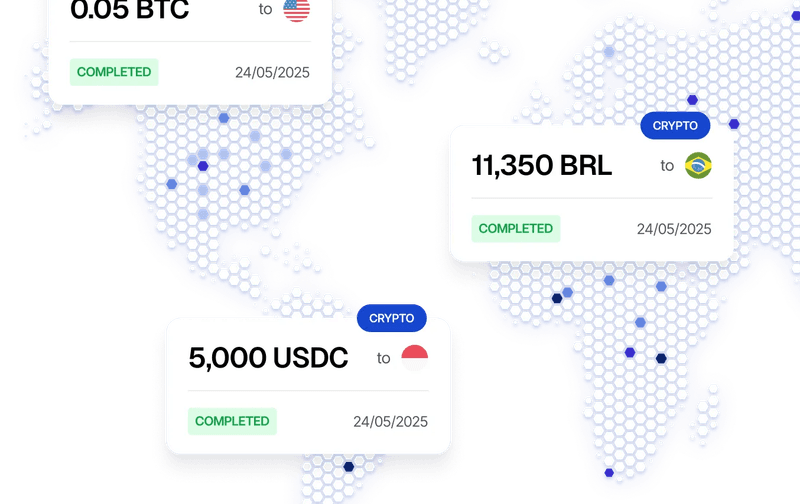
Treasury volatility is managed by locking in exchange rates at the moment of execution. The rail converts stablecoins or native tokens into fiat, shielding the organization from price swings that could otherwise disrupt payroll schedules or leave employees underpaid. This automation turns a high-stakes legal liability into a streamlined operational workflow.
2026 regulatory changes affecting web3
The 2026 regulatory landscape for DAOs has shifted from vague guidance to enforceable mandates. Treasury distributions are no longer just smart contract executions; they are now subject to the same friction points as traditional corporate payroll. For DAO operators, this means treating token allocations as taxable wages and navigating a patchwork of state-level reporting requirements.
OBBBA reporting requirements
The One Big Beautiful Bill Act (OBBBA) introduced new federal reporting standards that directly impact how DAOs handle cross-border and domestic payments. While the act is often discussed in the context of immigration, its payroll compliance sections mandate stricter verification of worker classification for entities receiving federal contracts or operating within U.S. jurisdictions. For a DAO, this means that if your treasury interacts with U.S.-based contractors or employees, you must maintain rigorous documentation proving that payments are not misclassified as independent contractor fees when they constitute employee wages. Failure to align with these reporting standards can trigger audits that freeze treasury liquidity.
State-level privacy and pay transparency
Beyond federal mandates, state-level legislation is creating a compliance nightmare for decentralized teams. States like California, New York, and Washington have enacted strict pay transparency laws requiring salary ranges in job postings and internal compensation bands. For a DAO hiring globally, this creates a conflict: how do you post a transparent salary range for a role that is paid in volatile tokens? The solution lies in pegging the token allocation to a stablecoin equivalent at the time of hire, ensuring the "range" remains accurate for the duration of the posting. Additionally, state privacy laws now require explicit consent for data collection on workers. If your DAO uses on-chain analytics to track contributor activity for payroll distribution, you must ensure that this data collection is disclosed and consensual under laws like the CCPA or BIPA.
Impact on treasury distributions
These regulations force a change in how DAOs structure their treasury payouts. Automated, anonymous distributions are no longer compliant. DAOs must implement "rails" that include:
- KYC/AML verification for all recipients of token wages.
- Withholding mechanisms for federal and state taxes.
- Audit trails that link on-chain transactions to off-chain employment contracts.
The following table illustrates the shift from traditional payroll limitations to the automated compliance rails required for Web3 teams in 2026.
| Feature | Traditional Payroll | Automated DAO Rails (2026) |
|---|---|---|
| Worker Classification | HR-managed, manual review | Smart contract-enforced, KYC-verified |
| Tax Withholding | Automated via payroll provider | Pegged to stablecoin, withheld at source |
| Reporting | Quarterly W-2/1099 filings | Real-time OBBBA-compliant ledger entries |
| Pay Transparency | Internal HR policy | On-chain salary range visibility |
The financial stakes are high. As regulatory bodies like the IRS and SEC increase scrutiny, the cost of non-compliance can exceed the value of the treasury itself. DAOs must adopt these compliance rails not as optional features, but as foundational infrastructure for sustainable operations.
On-chain verification for audit trails
Auditors do not trust narratives; they trust immutable ledgers. For DAOs managing global teams, the blockchain serves as the primary source of truth for worker classification and payment history. This transparency transforms opaque crypto transactions into verifiable evidence, satisfying regulatory requirements that traditional decentralized structures often fail to meet.
By recording payroll disbursements on-chain, organizations create a permanent, tamper-proof record. This approach directly addresses the complexity of cross-border payments, where jurisdictional rules vary wildly. A stablecoin like USDC provides the necessary price stability for consistent wage calculations, ensuring that on-chain records reflect actual labor value rather than volatile asset swings.
The combination of on-chain data and stable settlement assets creates a robust audit trail. Regulators can verify that payments were made to the correct entities at the agreed-upon times, reducing the risk of misclassification or tax evasion claims. This level of visibility is not just a technical feature; it is a legal necessity for high-stakes compliance in 2026.
Choosing the right payroll provider
Selecting a payroll vendor is a legal risk management decision, not just a software purchase. DAOs must prioritize providers with explicit multi-jurisdictional compliance coverage. If a platform cannot automatically adjust withholdings for federal, state, and local tax codes, it is not viable for a global team. The cost of non-compliance—IRS penalties and fines—far exceeds any savings from a cheaper, limited tool.
API integrations are the next critical filter. Your payroll system must sync seamlessly with your treasury management and on-chain governance tools. Manual data entry introduces errors that can delay payments or misreport wages. Look for native connectors to your existing stack.
Fee structures in Web3 payroll often hide complexity. Avoid providers that charge per-transaction fees on crypto payouts, as these erode margins on small payments. Instead, opt for a flat monthly fee per employee or a transparent percentage of gross payroll. This predictability is essential for budgeting.
-
Multi-jurisdictional tax filing capability
-
Native API integration with treasury tools
-
Transparent flat-fee or percentage pricing
-
24/7 support with SLA guarantees
Frequently asked: what to check next
What are the payroll tax updates for 2026?
The 2026 tax landscape introduces stricter reporting thresholds for digital asset compensation. DAOs must now classify token vesting schedules as taxable income at the moment of vesting, not distribution, aligning with updated IRS guidance on decentralized governance tokens. Monthly deposits and quarterly filings remain mandatory, but penalties for late submissions have increased by 15% to deter non-compliance among remote-first teams.
What is the payroll tax deduction for 2026?
Employee payroll tax deductions for 2026 include a 6.2% Social Security tax on earnings up to $168,600 and a 1.45% Medicare tax with no income cap. Employers must match these amounts exactly. For DAOs paying in stablecoins, the taxable base is the fiat value at the time of transfer. Failure to withhold the correct percentage triggers immediate liability for the employer, including interest on the underpayment.
What are the five essential components of payroll?
- Gross earnings calculation: Accurate tracking of hours, tokens, or fiat owed to each contributor.
- Tax withholding: Deducting federal, state, and local taxes based on 2026 brackets.
- Benefit deductions: Managing pre-tax contributions for health insurance or retirement plans.
- Net pay distribution: Executing payments via bank transfer or approved stablecoin rails.
- Reporting and filings: Submitting W-2s, 941s, and annual reconciliations to avoid audits.
What are the latest payroll updates?
Recent updates emphasize cross-border compliance for Web3 teams. If a DAO distributes tokens to contributors in jurisdictions with specific digital asset tax laws, the platform must generate localized tax forms. Additionally, new anti-money laundering (AML) rules require enhanced due diligence for high-value payroll transactions exceeding $10,000 in a single month. Use official IRS resources to verify current filing deadlines and avoid costly penalties.
No comments yet. Be the first to share your thoughts!