The dao payroll automation limits to account for
Automating payroll for a decentralized autonomous organization (DAO) sounds like a simple fix for global compensation, but the reality involves navigating a complex regulatory and technical landscape. Unlike traditional companies that rely on centralized payroll providers, DAOs operate across borders without a central authority to enforce labor laws or manage tax withholdings. This structural difference means that "instant global payouts" are not just a feature of smart contracts; they are a workaround for a system that lacks standardized human resources infrastructure.
The core constraint is that smart contracts execute code, not compliance. When a DAO uses a platform like Sablier to stream crypto payments, it ensures transparency and reduces administrative overhead, but it does not automatically handle multi-jurisdictional tax reporting or employee classification. A DAO member in one country might be classified as an independent contractor, while a similar role in another country could be deemed an employee under local labor laws. Ignoring these distinctions can lead to significant legal liabilities for the collective treasury.
The volatility of crypto assets adds another layer of friction. While automated payroll removes the delay of manual bank transfers, it does not remove the risk of value fluctuation between the time a payout is triggered and when it is received or converted. DAOs must decide whether to pay in stablecoins to mitigate this risk or accept the inherent volatility of native tokens. This decision impacts both the treasury's stability and the recipients' purchasing power.
To address these constraints, successful DAOs treat payroll automation as a hybrid challenge. They combine the efficiency of tools like Aragon’s payroll dApp or Sablier’s streaming payments with robust legal wrappers. These wrappers, often structured as foundation entities in favorable jurisdictions, provide the necessary legal personality to manage contracts, taxes, and disputes. Without this legal backbone, automated payouts remain a technical exercise rather than a sustainable operational model. The goal is not just to move money faster, but to move it legally and sustainably.
Dao payroll automation choices that change the plan
Use this section to make the Why is the Year of Automated DAO Payroll decision easier to compare in real life, not just on paper. Start with the reader's actual constraint, then separate must-have requirements from details that are merely nice to have. A practical choice should survive normal use, maintenance, timing, and budget. If a recommendation only works in an ideal situation, call that out plainly and give the reader a fallback path.
| Factor | What to check | Why it matters |
|---|---|---|
| Fit | Match the option to the primary use case. | A good deal still fails if it does not fit the job. |
| Condition | Verify age, wear, and service history. | Hidden condition issues erase upfront savings. |
| Cost | Compare purchase price with likely upkeep. | The cheapest option is not always the lowest-cost option. |
Choose the right DAO payroll automation tool
Automating payouts removes administrative friction, but selecting the wrong protocol can expose your treasury to unnecessary risk. The decision comes down to matching your organization’s technical maturity with the right smart contract infrastructure. Below are the two primary options available for DAO payroll in 2026.
Sablier: Real-time salary streaming
Sablier is the industry standard for continuous token distribution. Instead of paying a lump sum at the end of a month, Sablier streams assets second-by-second. This structure acts like a digital faucet, allowing members to withdraw exactly what they have earned up to that moment. It eliminates the need for complex payroll calculations and reduces the risk of overpayment if a member leaves early.
This approach is ideal for DAOs with global contributors who operate across multiple time zones. By automating the flow of funds, you remove the need for manual bank transfers or stablecoin batch processing. The system handles the logic, ensuring that every second of work is compensated instantly and transparently on-chain.
Aragon DAO Payroll dApp: Structured management
For organizations that prefer traditional monthly pay cycles but want to remove the manual work, Aragon offers a dedicated payroll dApp. This tool allows you to manage employee records, set fixed payment schedules, and track statistics in a single interface. It bridges the gap between decentralized governance and structured HR requirements.
Aragon’s solution is best suited for DAOs that need to enforce vesting schedules or handle different payment tiers for various roles. It provides a layer of organization that streaming tools lack, allowing treasury managers to audit payments and manage roles without writing custom smart contracts. The dApp automates the execution, ensuring payments go out on time without manual intervention.
Decision framework
Choosing between these tools depends on your operational needs. If your DAO relies on freelancers or contractors who prefer immediate access to funds, Sablier’s streaming model is the most efficient. If you are managing full-time staff with set salaries and benefits, Aragon’s structured dApp provides the necessary administrative clarity. Both options remove the bottleneck of manual processing, but they serve different financial structures.
Identify all current manual payouts. List the frequency, amount, and recipients. This baseline helps you determine if streaming or batch processing is more appropriate for your treasury size.
Onboard one or two contributors to the new system. Verify that the smart contracts execute correctly and that recipients can access their funds without technical barriers.
Once the pilot is stable, migrate the entire payroll budget. Update your governance proposals to reflect the new automated disbursement methods, ensuring transparency for all token holders.
Spot the weak options and misleading claims
Automated DAO payroll promises instant global payouts, but the market is crowded with tools that overpromise and underdeliver. Many platforms claim full automation but still require manual reconciliation of on-chain data with off-chain tax obligations. This gap creates liability for the DAO and exposes contributors to compliance risks.
When evaluating smart contract payroll integrations, look past marketing claims about "set-and-forget" functionality. Verify whether the protocol handles multi-currency conversions, gas fee estimation, and snapshot-based vesting schedules. Weak options often ignore the complexity of cross-chain transactions, leaving the treasury manager to manually bridge assets or calculate exchange rates at the time of payout.
Common mistakes include selecting a tool that lacks audit history or uses unverified oracles for price feeds. Always check if the smart contracts have been reviewed by reputable firms. Additionally, ensure the platform supports the specific tokens your DAO uses, as some payroll dApps are limited to ETH or stablecoins only. Choosing a rigid solution can lock your treasury into inefficient currency conversions or expose you to slippage during volatile market conditions.
The most reliable systems integrate directly with established DAO governance frameworks like Aragon or Snapshot, allowing payroll to be executed only after member approval. This adds a layer of security but reduces the speed of payouts. Balance this trade-off carefully: instant payouts are attractive, but they must not bypass the governance processes that keep the DAO accountable.
Dao payroll automation: what to check next
What does DAO stand for?
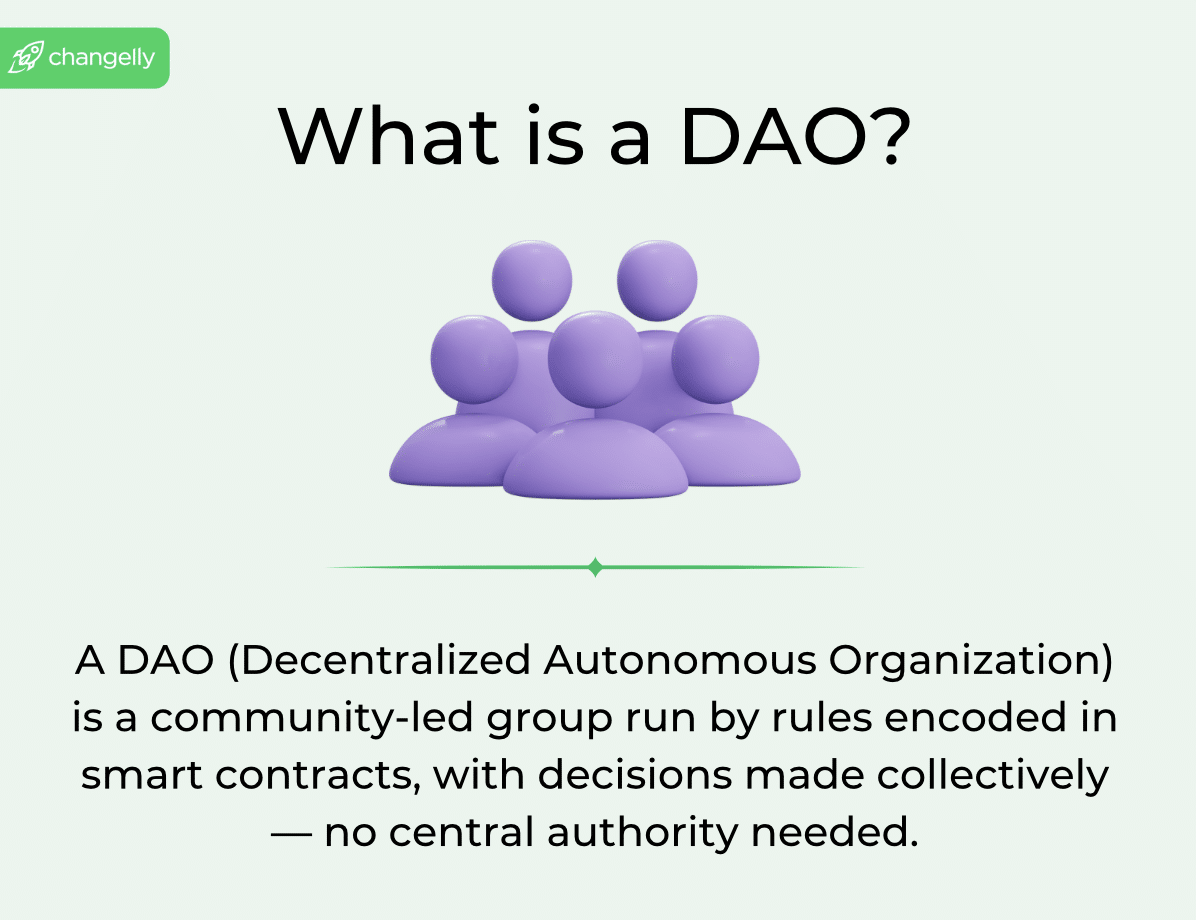
DAO stands for decentralized autonomous organization. It is a bottom-up entity structure where members own DAO-issued tokens and vote on initiatives for the entity. This structure replaces traditional corporate hierarchies with code-enforced governance rules.
What does DAO stand for in banking?
In banking, DAO refers to a community-led entity that operates without a central authority. Think of it like a community-owned financial institution. Members collectively decide on the direction, priorities, and future of the organization. This model allows for transparent, member-driven financial decisions without a traditional board of directors.
Can you give me an example of a DAO?
Examples of well-known DAOs include Dash, Augur, Steem, Uniswap, Synthetix, and ConstitutionDAO. Each DAO has a similar structure and can carry out a variety of activities. These organizations use smart contracts to manage treasury funds and execute community votes automatically.
Is there a way to automate payroll?
Yes, automated payroll systems include self-service portals so employees can access pay stubs, update details, or track tax filings without HR staff. This reduces back-and-forth communication common in manual systems. For DAOs, smart contracts enable instant global payouts, stripping out admin tasks and reducing room for human error.
No comments yet. Be the first to share your thoughts!