Why stablecoin rails replace legacy payroll
The traditional payroll infrastructure is built for a localized, high-friction world. For Decentralized Autonomous Organizations (DAOs) and global Web3 teams, this model has become a bottleneck. Legacy providers rely on correspondent banking networks that move money slowly, charge opaque fees, and struggle with cross-border compliance. Stablecoin rails offer a structural alternative: a direct, permissionless settlement layer that aligns with the borderless nature of digital work.
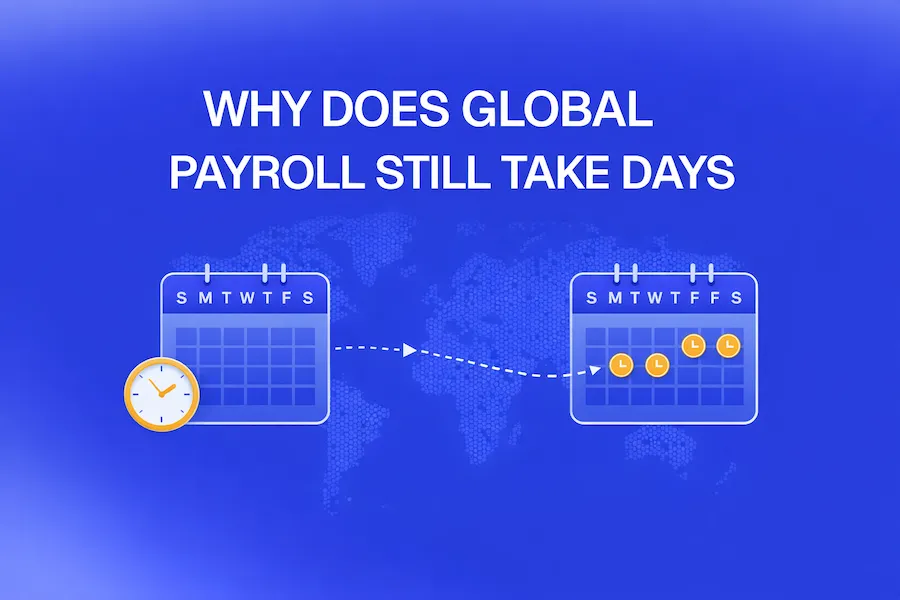
The shift is driven by three concrete advantages: speed, cost, and accessibility. Traditional wire transfers can take three to five business days to settle, with intermediary banks taking cuts along the way. Stablecoin transactions settle in minutes—or seconds, depending on the network—with predictable, low transaction fees. This efficiency is not just a convenience; it is a financial imperative for organizations operating across multiple time zones and currencies.
Cost Comparison: Traditional cross-border payroll fees often range from 3% to 5% per transaction, including foreign exchange spreads. Stablecoin rails typically cost less than 1% in network fees, regardless of the recipient's location.
This cost reduction is significant for global compliance. By reducing the number of intermediary steps, DAOs can streamline their audit trails. On-chain transactions provide an immutable, transparent record of every payment, simplifying tax reporting and regulatory verification. While legacy systems require complex reconciliations between bank statements and internal ledgers, stablecoin payroll integrates directly into the organization’s treasury management.
The 2026 landscape favors this transition. As regulatory frameworks for digital assets mature, the clarity of on-chain data becomes a compliance asset rather than a liability. DAOs are moving away from fragmented payroll tools toward unified stablecoin rails, treating digital currency as the primary settlement method for global talent.
Top platforms for automated DAO compensation
Selecting the right stablecoin rail for DAO payroll requires matching your team's operational rhythm with the platform's technical capabilities. In 2026, the market has consolidated around three distinct approaches: continuous streaming, scheduled batch processing, and hybrid models that combine both with vesting schedules. The choice dictates not only how quickly contributors get paid but also how easily the DAO can navigate cross-chain compliance and tax reporting.
Streamflow remains the dominant choice for Solana-based organizations, offering native streaming payouts that allow contributors to receive wages in real-time as work is performed. This model reduces the administrative burden of traditional pay cycles and aligns compensation directly with activity. However, it requires a more sophisticated treasury management strategy to ensure sufficient liquidity is available on-chain at all times.
For DAOs operating across multiple EVM chains or requiring strict adherence to traditional bi-weekly or monthly pay cycles, platforms like Rise provide robust batch processing capabilities. These tools often integrate with off-chain identity verification (KYC) and automated tax form generation, which is critical for high-stakes compliance. The trade-off is a delay in fund settlement, meaning contributors must wait for the batch to be processed and confirmed before accessing their funds.
Hybrid platforms are emerging to bridge this gap, allowing DAOs to stream core salaries while issuing vesting schedules for equity-like tokens or performance bonuses. This flexibility is essential for long-term retention but adds complexity to the accounting ledger. Before committing to a provider, verify that the platform supports the specific stablecoins (USDC, DAI, or native chain assets) used by your treasury and that its compliance features meet the regulatory requirements of your contributors' jurisdictions.
| Platform | Supported Chains | Payout Model | Compliance Features |
|---|---|---|---|
| Streamflow | Solana | Streaming & Batch | Basic on-chain audit trails |
| Rise (RiseWorks) | Multi-EVM | Batch & Scheduled | KYC/AML integration, tax forms |
| PensionX | Multi-chain | Streaming (Pension-style) | Regulatory sandbox support |
| Superfluid | Multi-EVM | Streaming (Protocol-level) | None (Protocol only) |
| Mango | Multi-chain | Batch & Vesting | Identity verification |
Compliance risks in decentralized work
The shift to stablecoin payroll does not erase the legal obligations that come with paying global contributors. In 2026, the regulatory environment for decentralized autonomous organizations (DAOs) remains unforgiving. The primary friction point is not the technology, but the classification of the workers who build on it. Treating every contributor as an independent contractor is a common misconception that carries significant financial and legal risk.
Worker classification: Employee vs. Contractor
The distinction between an employee and a contractor determines tax withholding, benefits, and liability. In the United States, the IRS uses the "common law" test to determine worker status, focusing on behavioral control, financial control, and the relationship of the parties. If a DAO dictates when, where, and how work is done, the worker may legally be an employee, requiring payroll tax deductions and reporting on Form W-2.
In the European Union, the presumption of employment is stronger. Many member states have strict criteria that, if met, automatically classify a worker as an employee. For DAOs operating globally, this creates a compliance nightmare. A contributor in Germany might be classified as an employee under local law, while a contributor in Singapore is treated as a contractor. Stablecoin payments do not change these legal definitions; they only change the speed of settlement.
Tax reporting and permanent establishment
Beyond classification, DAOs face risks related to permanent establishment (PE). If a DAO has a fixed place of business or a dependent agent acting on its behalf in a country, it may be subject to corporate tax in that jurisdiction. Payroll is one of the strongest indicators of a permanent establishment. Regular payments to a group of individuals in a specific location can trigger tax obligations for the DAO itself.
Reporting obligations also vary by country. Some jurisdictions require DAOs to report crypto-related income and payments to tax authorities. Failure to report stablecoin distributions can result in audits, back taxes, and heavy fines. The anonymity of blockchain transactions does not protect the DAO from regulatory scrutiny. Tax authorities are increasingly using blockchain analytics to trace payments and identify unreported income.
Navigating the regulatory landscape
Compliance is not optional. DAOs must adopt a proactive approach to legal risk. This includes conducting regular audits of worker classification, consulting with local tax experts in key jurisdictions, and maintaining detailed records of contributor agreements. The use of stablecoin payroll platforms that offer compliance features, such as automated tax withholding and reporting, can help mitigate some risks.
The cost of non-compliance far outweighs the cost of building a robust legal framework. As the regulatory landscape matures, DAOs that prioritize compliance will gain a competitive advantage. They will attract top talent, secure institutional investment, and avoid the costly legal battles that plague non-compliant organizations. The future of DAOs depends on their ability to operate within the bounds of the law, not outside of it.
Treasury integration and multisig workflows
Paying a global DAO workforce requires more than just selecting a stablecoin; it demands a treasury architecture that balances speed with immutable security. The core of this system is the multisignature (multisig) wallet, which acts as the vault for your payroll funds. Instead of a single private key controlling the treasury, a multisig requires multiple authorized signers to approve transactions before funds move. This structure prevents rogue payouts, accidental transfers, or single-point failures that could drain the treasury.
To implement this without manual friction, you must configure the multisig thresholds and integrate them with payroll software. The goal is to make the approval process as routine as signing a standard check, rather than a high-stakes security event. Below is the technical workflow for integrating stablecoin rails into your DAO’s treasury operations.
Choose a stablecoin with deep liquidity and low transaction fees on your DAO’s primary chain, such as USDC on Ethereum or Solana. The currency must be supported by your multisig provider and payroll platform to ensure seamless settlement. Avoid niche tokens with thin order books, as slippage can erode payroll value during volatile market conditions.
Set up a multisig wallet (e.g., Gnosis Safe or SafeWallet) with a threshold that matches your governance structure. For payroll, a common setup is 2-of-3 or 3-of-5 signers, ensuring that no single individual can authorize large batches of payments. Define clear roles: one signer for finance verification, one for operational approval, and one for final execution.
Connect your chosen DAO payroll platform to the multisig wallet via API or wallet connection. This integration allows payroll data (names, amounts, tax IDs) to be prepared off-chain and then packaged into a transaction proposal for on-chain approval. The software should automatically generate the transaction payload, reducing the risk of manual data entry errors.
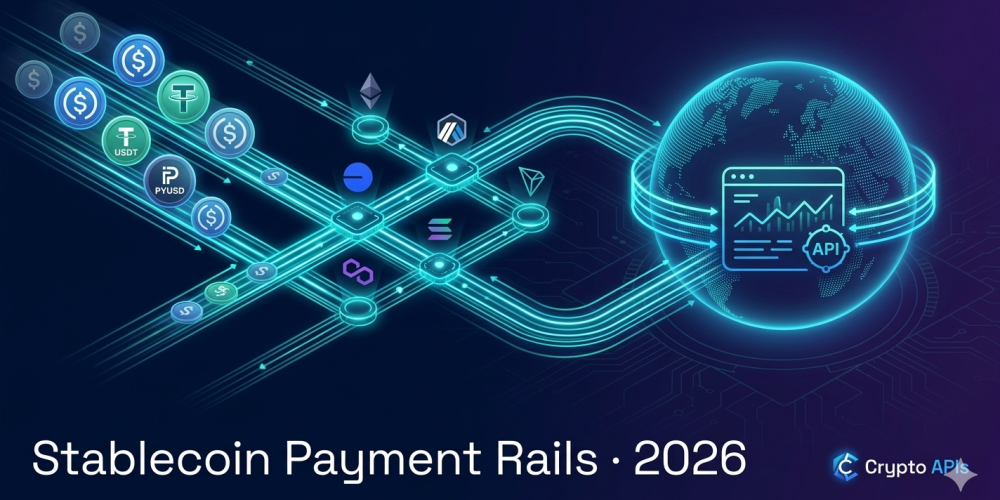
Implement governance rules that streamline the approval process for routine payroll cycles. For example, if the total payout is within a predefined budget limit and the transaction is signed by the finance signer, the system can auto-queue the transaction for the final signer. This reduces the "approval fatigue" that often slows down multisig operations.
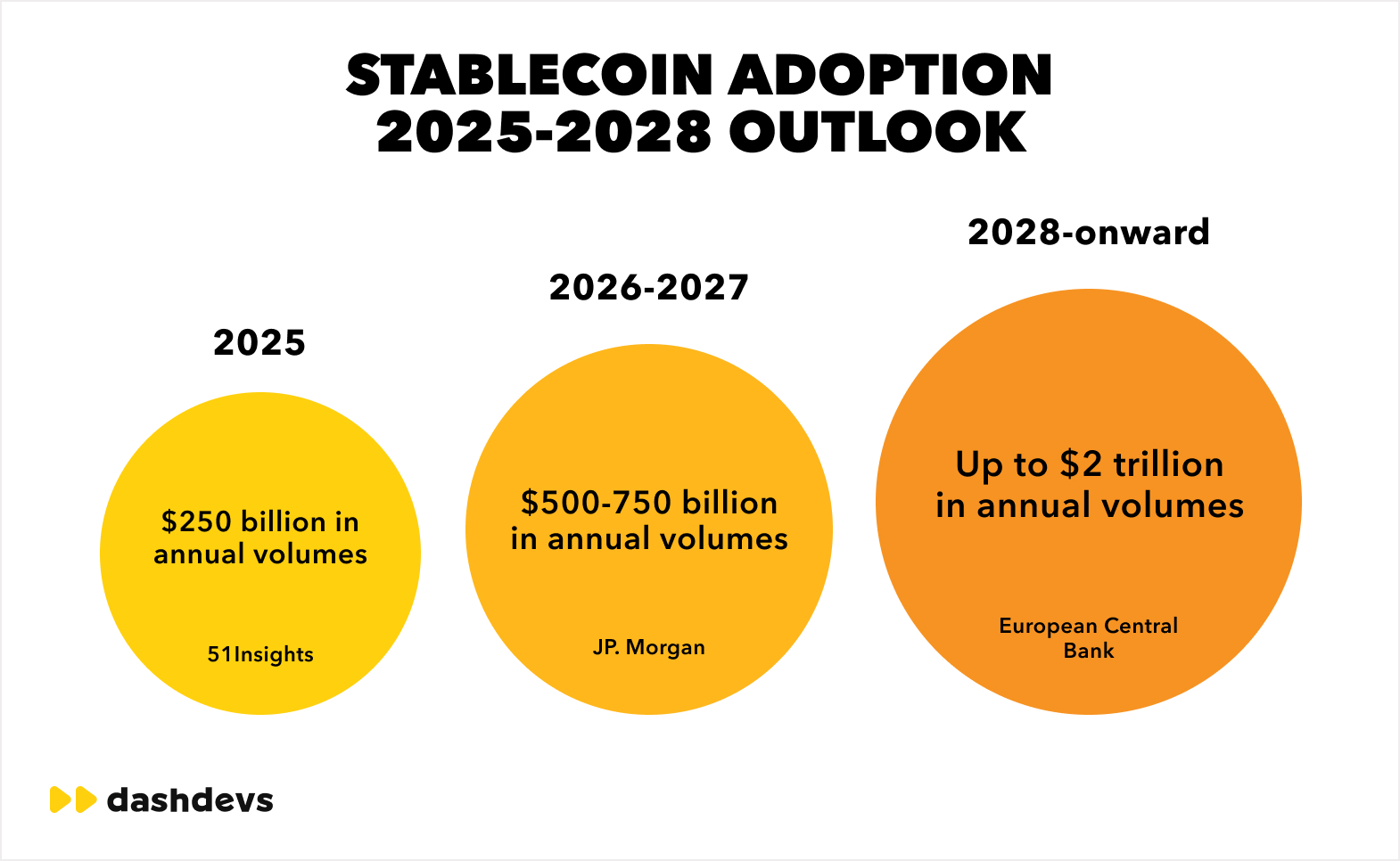
Before processing full payroll, run a test transaction with a small amount to a dummy address or a single volunteer. Verify that the multisig signatures are collected correctly, the stablecoin transfers as expected, and the payroll software records the transaction hash accurately. This step catches configuration errors before real funds are at risk.
This workflow transforms the treasury from a passive storage mechanism into an active, compliant payroll engine. By standardizing the multisig process, you ensure that every dollar paid out is authorized, traceable, and resistant to unauthorized access.
Market trends for web3 payroll in 2026
The infrastructure for DAO payroll is shifting from experimental to essential. As stablecoin rails mature, the volume of cross-border payments has normalized, allowing organizations to move beyond simple USDT transfers toward compliant, multi-currency workflows. This structural change is driven by the need for real-time settlement without the friction of traditional banking layers.
The market is consolidating around platforms that prioritize compliance and automation. Rather than relying on manual spreadsheet management, teams are adopting integrated systems that handle batch payroll, vesting schedules, and streaming payouts in a single interface. This shift reduces administrative overhead and ensures that payroll data aligns with regulatory reporting standards from the start.
Stablecoin stability remains the foundation of this growth. By pegging payroll to established assets, DAOs mitigate the volatility risks that previously deterred widespread adoption. The result is a more predictable income stream for global contributors and a clearer audit trail for treasuries.
Frequently asked questions about DAO payroll
Which payroll cycle has 26 pay periods in a year?
The bi-weekly schedule is the standard for 26 pay periods annually. This cycle aligns well with global compliance needs, offering a predictable cadence for contributors while keeping administrative overhead manageable for DAO treasuries managing stablecoin distributions.
How do tax reporting requirements differ for DAO contributors?
Tax obligations depend on the contributor’s jurisdiction and the DAO’s legal structure. In many regions, receiving stablecoins is treated as taxable income at the time of receipt. DAOs must often issue forms similar to 1099s for US-based contractors, requiring precise record-keeping of transaction timestamps and fair market values.
Can DAO payroll be fully automated for global compliance?
Automation reduces errors but does not eliminate legal liability. Smart contracts can execute payments instantly, but compliance checks—such as sanctions screening and KYC verification—must occur off-chain or via trusted oracles before the transaction is finalized on-chain.
No comments yet. Be the first to share your thoughts!