Why DAO payroll rails matter now
The era of ad-hoc crypto payments is ending. In 2026, Decentralized Autonomous Organizations (DAOs) face intense regulatory scrutiny regarding worker classification and cross-border tax withholding. Manual payments via personal wallets no longer satisfy legal obligations, exposing the organization and its contributors to significant liability.
Structured payroll rails solve this by acting as the compliance layer between on-chain treasury and off-chain reality. These systems typically utilize Employer of Record (EOR) services to handle local labor laws, social security, and tax withholding. Once statutory obligations are met, the residual compensation is settled in stablecoins, ensuring speed and low cost for global contributors.
This shift marks a transition from experimental finance to institutional-grade operations. By integrating EOR mechanisms with blockchain settlement, DAOs can operate globally while adhering to the strict legal frameworks of individual jurisdictions. The infrastructure is no longer optional; it is the foundation of sustainable governance.
Core team payroll via EOR
Treating core contributors as local employees requires more than a blockchain transaction; it demands a legal employer capable of navigating fragmented labor codes. An Employer of Record (EOR) serves as the statutory employer in the contributor’s jurisdiction, handling all local compliance burdens while the DAO retains operational control. This structure ensures that labor laws, social security contributions, and mandatory benefits are satisfied without the DAO establishing a physical entity in every country where it hires.
The payroll mechanism splits into two distinct rails. First, the EOR processes the gross salary through traditional banking systems to deduct and remit local taxes and withholdings. This step isolates the DAO from direct tax liability and ensures adherence to national labor regulations. Second, the residual compensation is settled to the contributor’s preferred wallet, often in stablecoins, leveraging the speed and low cost of blockchain infrastructure for final disbursement.
This hybrid approach allows the DAO to maintain a global, permissionless workforce while satisfying the rigid requirements of national tax authorities. By delegating statutory obligations to the EOR, the organization avoids the regulatory penalties associated with misclassifying employees as independent contractors. The result is a compliant payroll rail that supports both legal security and operational flexibility.
Stablecoin settlements for contractors
Paying independent contractors in stablecoins requires a disciplined workflow that separates legal compliance from settlement mechanics. The most robust approach treats the EOR as the legal employer for tax withholding and statutory obligations, while the DAO handles the residual compensation via blockchain rails. This structure ensures that withholding requirements are met in fiat or local currency before the contractor receives their stablecoin balance.
Clear contractor agreements are essential to avoid misclassification risks. These agreements must explicitly define the scope of work, deliverables, and payment terms to distinguish the relationship from an employment contract. Without precise language, tax authorities may reclassify contractors as employees, triggering back taxes and penalties that the DAO treasury must cover.
Settlements should be executed through multi-sig treasury reconciliation tools that provide audit-ready reports across multiple chains. This transparency allows the DAO to prove that payments were made for legitimate services, supporting the contractor’s status as an independent entity. The combination of legal separation and on-chain transparency creates a defensible payroll rail for global operations.
Hybrid compensation models
Split compensation structures separate base salary from variable rewards to satisfy distinct regulatory requirements. The base salary is processed through compliant fiat rails, ensuring adherence to local labor laws, tax withholding, and social security obligations. Performance bonuses or equity grants are then distributed as tokens, allowing for global settlement without traditional banking friction.
EOR services manage the fiat portion of this arrangement. They handle the complex legalities of local employment, including payroll processing and statutory deductions. This ensures that the worker receives their guaranteed income in their local currency, fully compliant with jurisdictional mandates. The DAO avoids the burden of establishing legal entities in every country where it hires talent.
The token portion of the compensation operates outside traditional banking systems. Bonuses are distributed via smart contracts, often in stablecoins to mitigate volatility risk during the vesting period. This hybrid approach balances legal certainty with the efficiency of blockchain settlement. It allows DAOs to remain decentralized while respecting the rigid compliance frameworks of traditional finance.
Comparing DAO payroll solutions
Selecting a payroll rail requires aligning technical infrastructure with jurisdictional compliance. The three primary providers—Rise Works, Wag3s, and HashBlock—offer distinct mechanisms for settling global contributor payments.
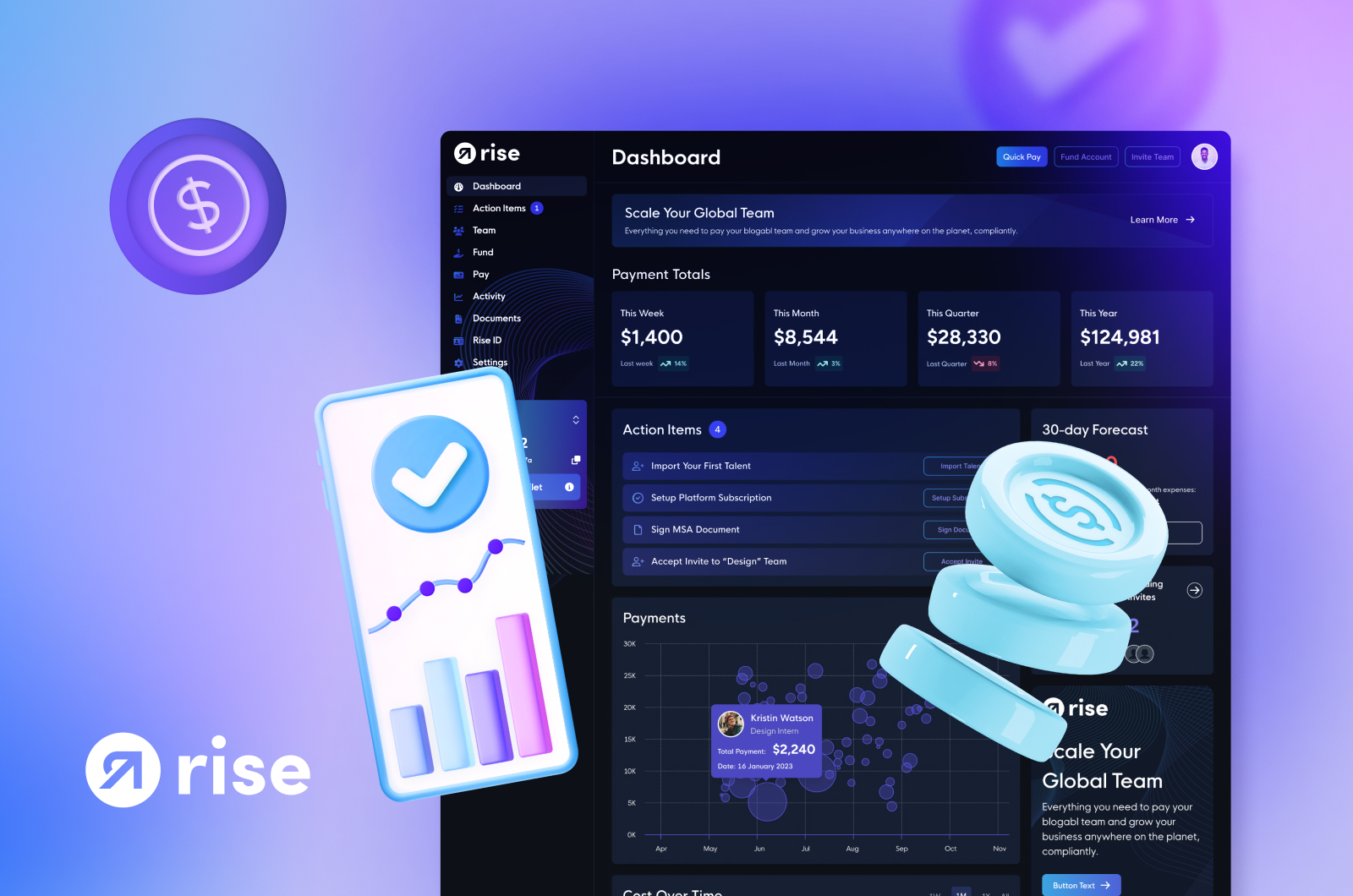
Rise Works functions as a global payroll rail, leveraging Solana for near-instant settlement. It handles compliant payouts across 190+ countries, effectively acting as an EOR to manage local tax obligations before distributing net amounts.
Wag3s operates as a Finance OS focused on treasury reconciliation. It supports multi-sig workflows and audit-ready reporting across 30+ chains, prioritizing internal governance and accounting accuracy over direct EOR services.
HashBlock specializes in tax-efficient payroll flows. It combines local payroll rails for withholding and employer obligations with stablecoin delivery for the residual compensation, aiming to minimize tax friction for contributors.
| Provider | Compliance Model | Supported Chains | Settlement Method |
|---|---|---|---|
| Rise Works | EOR / Local Tax | Solana | Near-instant Stablecoin |
| Wag3s | Audit-ready Reporting | 30+ Chains | Multi-sig Treasury |
| HashBlock | Withholding + Stablecoin | Multi-chain | Hybrid (Local + Crypto) |
Track treasury liquidity for payroll
Treasury volatility poses a direct compliance risk when paying global contractors. If your treasury is denominated in volatile assets like ETH, a sudden market drop can leave you unable to meet payroll obligations in fiat or stablecoins. You must monitor these balances in real time to ensure sufficient liquidity for payroll rails.
Use live market data to track your primary treasury assets. The chart below illustrates ETH price movements, helping you gauge the fiat value of your holdings against upcoming payroll dates.
Regular reconciliation prevents shortfalls. By aligning your treasury monitoring with payroll schedules, you maintain the liquidity needed to settle contributions via compliant payment rails without triggering tax or regulatory issues.
Compliance checklist for DAO payroll
DAO payroll rails operate within established regulatory frameworks, requiring precise handling of withholding and employer obligations. The following clarifications address frequent queries regarding DAO viability, definitions, and tax liabilities.
Compliance relies on integrating traditional payroll mechanisms, such as EOR services, with on-chain settlement. This hybrid approach ensures that withholding obligations are met locally, while the residual compensation is distributed in stablecoins, mitigating regulatory friction for global contributors.
No comments yet. Be the first to share your thoughts!